
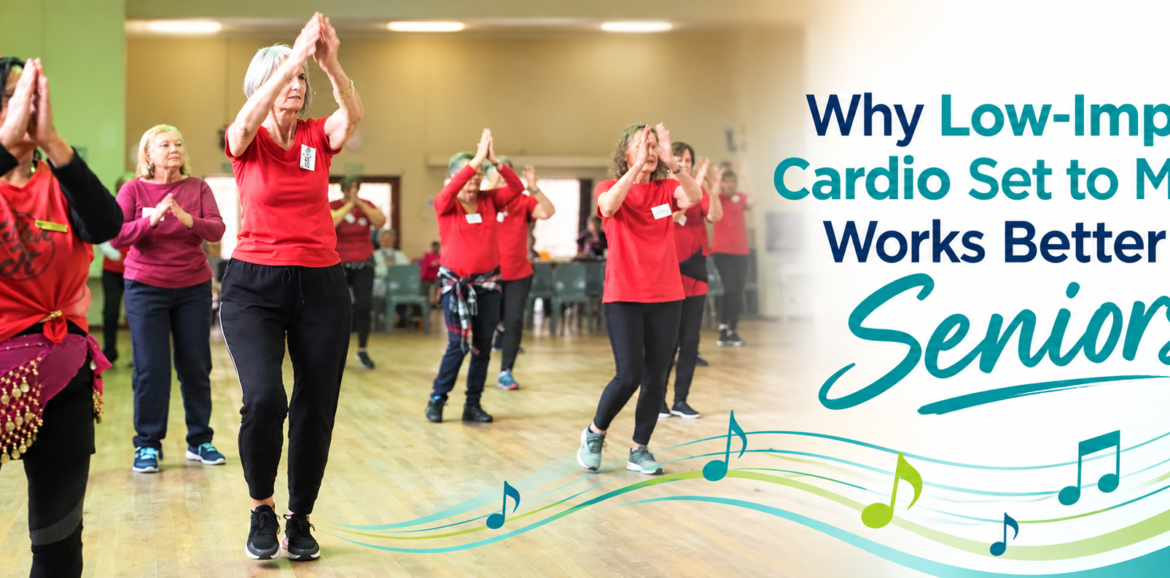
There’s a reason so many senior fitness classes reach for music the moment cardio work begins — and it’s not just to keep things fun. Music and low-impact movement work together in ways that make cardiovascular exercise safer, more effective, and far more sustainable for older bodies.
Low impact doesn’t mean low benefit
A common misconception is that “low-impact” means “easy” or “not real exercise.” In reality, low-impact cardio — movements that keep at least one foot on the ground at all times, avoiding jarring or jumping motions — is simply cardio designed to protect joints while still raising the heart rate. For seniors, this distinction matters enormously. Joints, cartilage, and bone density change with age, and high-impact activities can place unnecessary strain on knees, hips, and ankles. Low-impact routines let the heart and lungs get a genuine workout without that risk.
Why music isn’t just decoration
Music does more than make a class enjoyable, though that matters too. Rhythmic music helps regulate pace naturally, so participants move consistently rather than starting too fast and burning out, or moving too slowly to get real cardiovascular benefit. A steady beat also supports coordination and timing, which ties cardio work directly into balance and co-ordination — two other pillars of senior fitness.
There’s a cognitive benefit as well. Following music and movement together engages the brain in a way that solo repetitive exercise often doesn’t, keeping sessions mentally stimulating, not just physically demanding.
The social and emotional lift
Familiar music — often spanning decades, from classic hits to more recent favourites — creates an emotional connection to the workout. Exercising to a song you love doesn’t feel like exertion in the same way a treadmill countdown does. This is part of why music-driven cardio classes tend to see far better long-term attendance than solitary, equipment-based routines: people come back because they enjoy it, not because they feel obligated to.
Working at your own pace, together
One of the strengths of a group cardio class built this way is that everyone moves to the same music, but not necessarily with the same intensity. Steps can be smaller or larger, arm movements more or less exaggerated, and participants are encouraged to work within their own fitness level. The shared rhythm creates unity without demanding uniformity — which is exactly what makes it sustainable for a room with a wide range of abilities and fitness levels.
The takeaway
Low-impact, music-based cardio isn’t a gentler substitute for “real” exercise — it’s a format specifically suited to protecting the body while still delivering genuine cardiovascular benefit. Combined with the social energy of a group setting, it becomes something people actually want to keep doing, which, for long-term heart health, may be the most important ingredient of all.